Compra
 Configuración
 Entrega rápida
Los pedidos se entregan normalmente a México en un plazo de 1 a 5 días, según la ubicación.
 Entrega Gratis
El envío gratuito a México se aplica a pedidos de USD 100 o más. Los gastos de envío serán de USD 30 para todos los pedidos inferiores a USD 100.
 Incoterms
Flete prepago de UPS, FedEx o DHL: CPT (aranceles, aduanas e impuestos adeudados en el momento de la entrega)
 Tipos de pago
Cuenta de crédito para instituciones y empresas calificadas
Pago por adelantado a través de transferencia bancaria


 Producto del mercado
Más productos de socios totalmente autorizados
Tiempo promedio de envío de 1 a 3 días , se pueden aplicar cargos adicionales por envío. Consulte la página de productos, el carrito y el pago para estimar la velocidad del envío actual.
Incoterms: CPT (impuestos, tarifas aduaneras e IVA/impuestos aplicables pagaderos en el momento de la entrega)
Para obtener más información, visite Ayuda y soporte
The controller utilizes a constant on-time control scheme which eliminates the need for external compensation components, allowing the power supply designer to minimize necessary board space and reduce costs.
The LM2771 is a switched capacitor step-down regulator that produces a 1.5V output without the use of an inductor. It is capable of supplying loads up to 250mA. The LM2771 operates with an input voltage from 2.7V to 5.5V, and requires only 3 low-cost ceramic capacitors.
The MAX15020 evaluation kit (EV kit) is a fully assembled and tested PCB that evaluates the MAX15020 PWM step-down regulator IC with an integrated high-side switch. The MAX15020 is equipped with a reference input for the feedback error amplifier, allowing dynamic output-voltage programming. The MAX15020 EV kit operates over a wide input-voltage range of 7.5 V to 40 V and provides up to 2A.
The BD70522GUL-EVK-101 evaluation board is a power supply solution designed for battery powered devices. 180nA quiescent current and ULP (Ultra Low Power) mode enable excellent light load efficiency at 10µA load, extending battery life, while output currents up to 500mA are supported. Users can select from among 9 preset output voltages via the VSEL pin. And when the input voltage gets close to the output voltage, the IC enters 100% ON mode that stops switching operation.
The TPS62823EVM-005 evaluation module (EVM) facilitates the evaluation of the TPS62823 3-A, step-down converter with DCS-Control in a 2-mm by 1.5-mm QFN package. The EVM outputs a 1.8-V output voltage with 1% accuracy from input voltages between 2.4V and 5.5V with a maximum solution height of 1 mm.
The TLV62569EVM-884 evaluation module (EVM) is designed to help the user easily evaluate and test the operation and functionality of the TLV62569PDDC. The EVM converts a 2.5-V to 5.5-V input voltage to a regulated output voltage of 1.8V at up to 2 A output current.
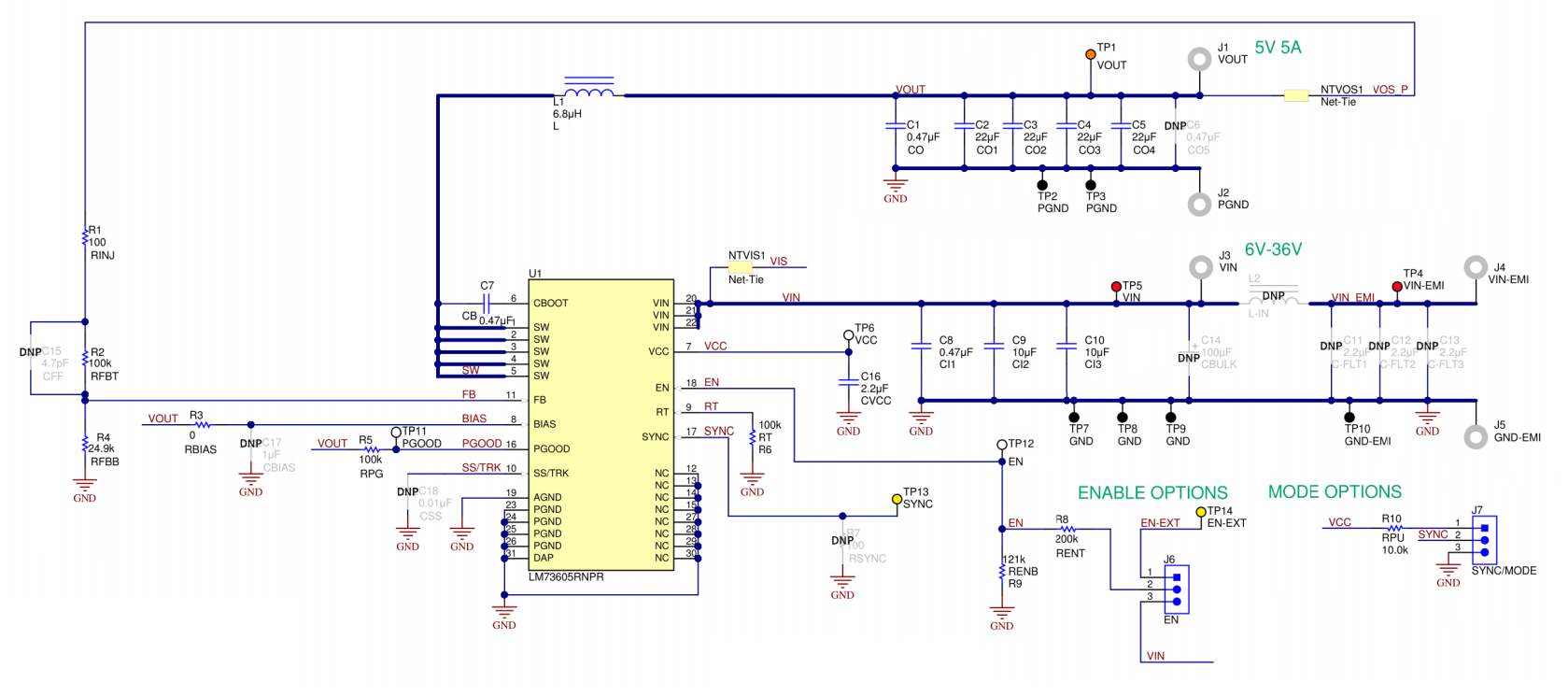
The LM73605EVM-5V-400K evaluation module (EVM) is a fully assembled and tested circuit for evaluating the LM73605 synchronous step-down voltage converter. The EVM operates from 6V to 36V input and provides a 5V output voltage with 5A maximum load current.
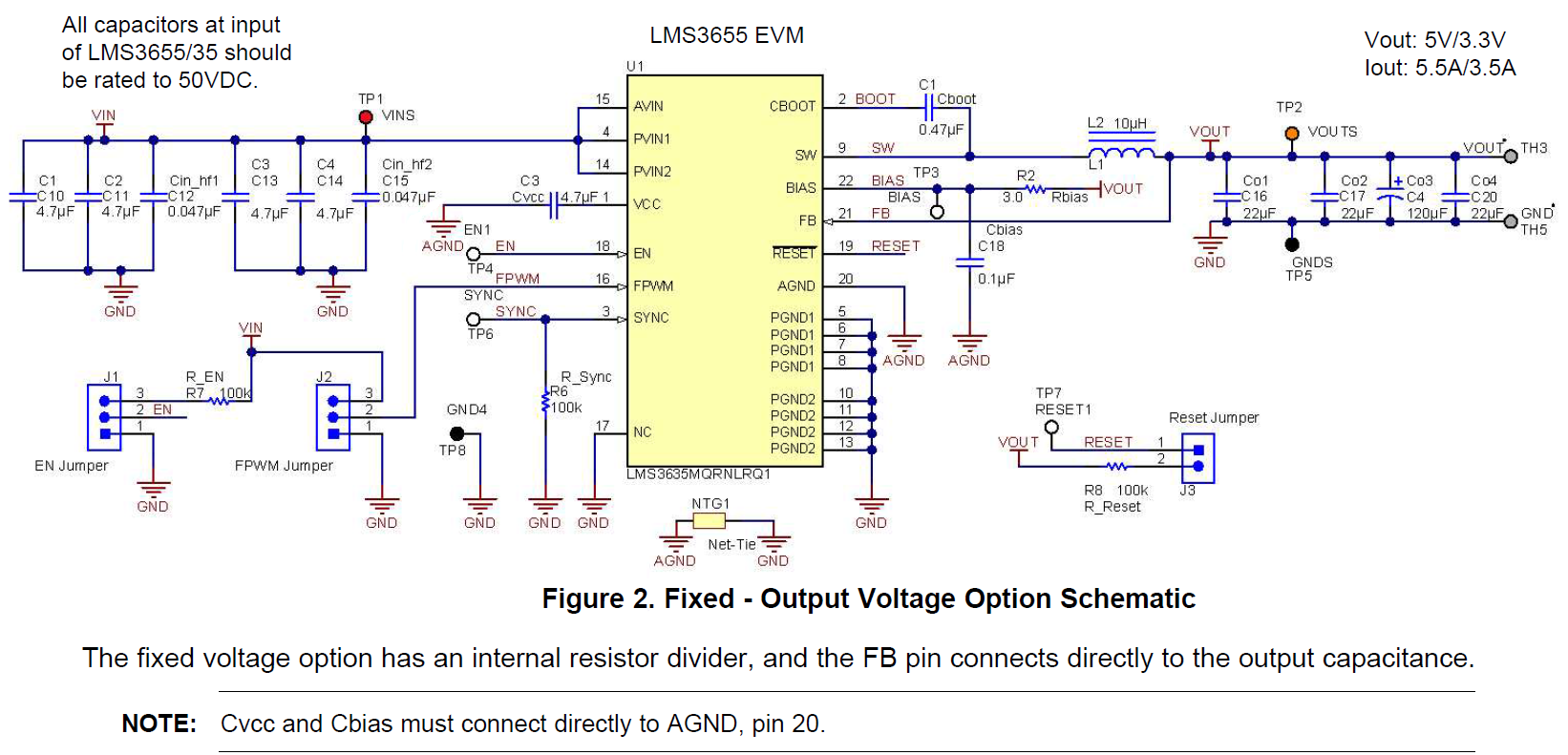
The LMS3655xQEVM is specifically designed for automotive and high-performance industrial applications, providing an output voltage of 5 V, 3.3 V, or an adjustable output at a continuous load of 5.5-A.
The RT7247A is a high efficiency, monolithic synchronous step-down DC/DC converter that can deliver up to 2A output current from a 4.5V to 18V input supply. The RT7247A's current mode architecture and external compensation allow the transient response to be optimized over a wide range of loads and output capacitors.
The RT8296A is a high efficiency, monolithic synchronous step-down DC/DC converter that can deliver up to 3A output current from a 4.5V to 23V input supply. The RT8296A's current mode architecture and external compensation allow the transient response to be optimized over a wide range of loads and output capacitors.
Conavegar
Al usar la función de Conavegación, acuerda que un representante de soporte de DigiKey pueda ver su navegador de forma remota. Cuando se abre la ventana de Conavegación, informe al representante la Id. de sesión que se encuentra en la barra de herramientas.
DigiKey respeta su derecho a la privacidad. Para obtener más información, consulte el Aviso de privacidad y el Aviso de cookies.
Sí, continuar a la Conavegación
¡Gracias!
¡Esté atento a las noticias y actualizaciones de DigiKey que llegarán a su bandeja de entrada!
Ingrese una dirección de correo electrónico
Acepte marcando la casilla




 México
Copyright © 1995-2026, DigiKey.
Todos los derechos reservados.
Términos y condiciones
Aviso de privacidad
Configuración de cookies
México
Copyright © 1995-2026, DigiKey.
Todos los derechos reservados.
Términos y condiciones
Aviso de privacidad
Configuración de cookies