






 Settings
 Fast Delivery
 Free Shipping
 Incoterms
 Payment Types


 Marketplace Product

Espressif Releases ESP32 with Wi-Fi and Bluetooth Capabilities
2016-09-21 | By Maker.io Staff
On the 3rd of September ESPRESSIF released a new IC, the ESP32. The module has a combination of high performance WiFi and Bluetooth technology whilst offering an ultra-low power consumption which is becoming standard across the range. Only a few days after the launch Seeed Studio have released the ESP3212 module based on the ESPRESSIF ESP32 chipset. The module integrates the following features:
- Xtensa 32-bit LX6 up to 600 DMIPS Dual-Core Processor
- 448 Kbyte ROM
- 520 Kbyte SRAM
- 16 Kbyte SRAM in Real Time Clock
- 802.11 b/g/n/e/I Wi-Fi
- Bluetooth v4.2 & BLE
- 2.2-3.6V Supply
- Built-in Clock and Timings
- Added Security
The ESP3212 module provides a fully comprehensive SDK firmware for rapid prototyping on-line and open-source toolchains based on GCC for dev support. Seeed Studio have stated that this module is primarily aimed at end node devices including local mesh networks in the IoT, mobile and wearable markets.
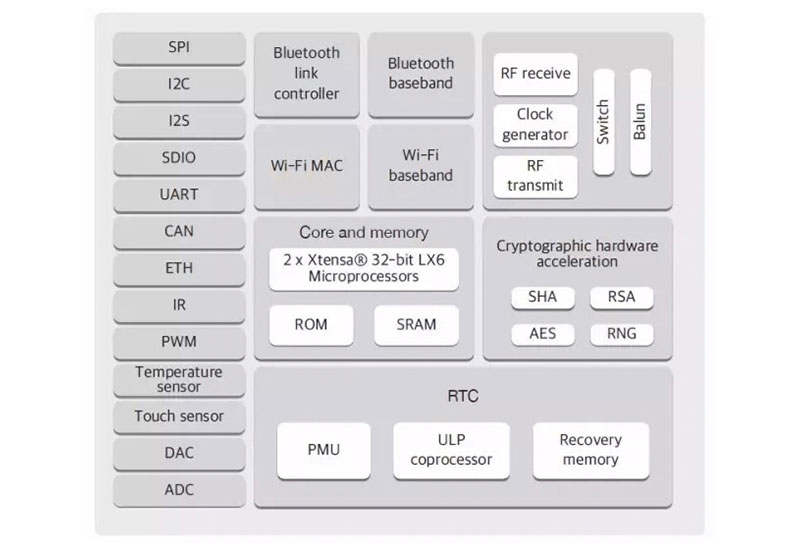
The ESP32 offers the same form factor and previous ESPRESSIF modules such as the popular ESP8266, with advanced industry leading technology in WiFI and Bluetooth and only 10 components on-board. The module also features power saving management with consuming only 90mAh on average.
Amongst the wireless features there are an abundant of interface options to connect and control all your real-world hardware devices:
- 18x 12-bit ADC
- 2x 8-bit DAC
- 10x Touch sensors
- Temperature sensor
- 4x SPI, 2x I2S, 2x I2C, 3x UART
- IR both Tx and Rx
- 16x PWM channels
- Hall effect sensor
- Analog pre-amplifier
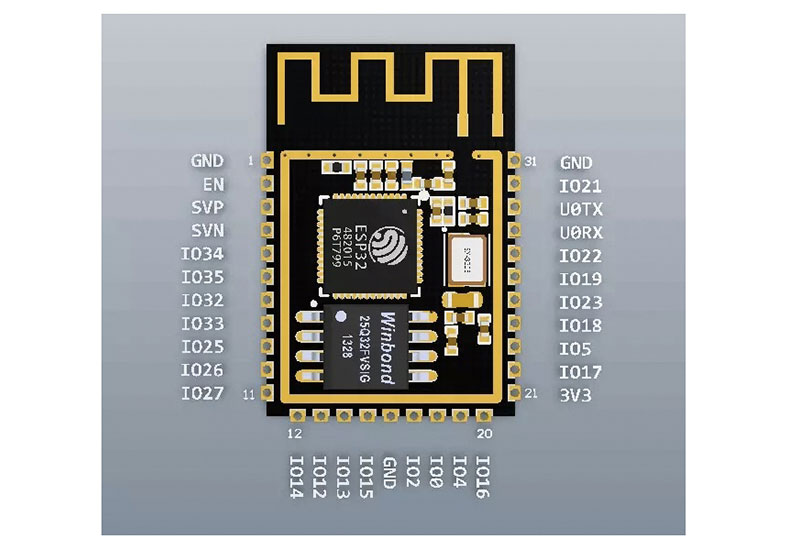
The ESP3212 runs freeRTOS on-board, which is a real-time operating system for small embedded devices where a Linux OS simply won’t fit. You can also run the basic AT command set and MicroPython.
Summary
This is by far the most advanced IoT module I have seen in a long time for only $7, with a vast array of features this module will set the standard for other hardware/manufacturing companies. The only downside that I noticed is that according to the specification on Seeed’s product page, it does not support IPv6. These modules are difficult to get hold of at the moment as they are in very high demand with Seeed selling out their first batches.









 Mexico